Saturday, May 22, 2010

Hawaii Family Portrait Photographers

Hawaii Family Portrait Photographers

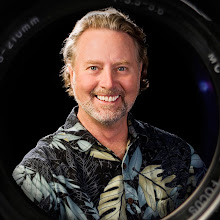
I am a Hawaii Family Portrait Photographer based on Oahu, but that hasn't always been my specialty.

First let me sat that 90 to 95% of all pro photographers in Hawaii are Wedding photographers. There's good reason for that. Hawaii is the world's number one wedding destination! While I've always been a Family Portrait photographer, for the first half of my career I was a "generalist". That is I did every kind of photography that one can do...above water. After 1991 I began to specialize in Family Portraits. That was the year my dad died. And that's when I realized I had no family portraits - not even a snapshot of my parents and siblings all together. And now it can never be done. Sad.

I have always been an artist, and people have always been my favorite subjects. I moved away from my family as a young 20-something to Kauai, Hawaii, and at that time I just didn't think about my own family portraits. And mortality was absolutely the furthest thing from my mind. I was on a life adventure to Hawaii!

I was a young man with a passion for art and photography living in Hawaii! I free lanced as a photographer for some time, then I took a position as a staff photographer for a Maui advertising agency. It wasn't long before I became the head of the photography department for the agency. Eventually I started my own promotions company and handled all the photography myself.

Then my dad passed away.
It was then that I discovered I had not one single family portrait, picture, snapshot. And that was when I learned the real value Family Portraits. That's when I understood what a treasure a fine family portrait truly is.

You see, no portraits exist of my family, and since my dad died there can never be one made. As a result my grandchildren and great grandkids will never know what my family looked like together. Even if we did have a snapshot of all of us together, it wouldn't be the same as having a fine, professional family portrait.

As a family portrait photographer here in Hawaii I create a lot of photographs at the beach, and so do a lot of other photographers. What I've noticed is that 99% of the beach photographs I see being made by other photographers are being made as if it were a wedding or other editorial type event. What I mean by that is the photographers are using only available light, or only one flash unit mounted right on the camera.

Available light can be very nice, but out on the beach in Hawaii, unless you set up with the sun shining in the subject's face, which will result in squinting, uncomfortable expressions, the sky will always come out white, because it will be way overexposed.

When using just one flash on the camera, the light is flat...but NOT flattering! (You can learn a lot more about location lighting by signing up for my class, "Little Lights - BIG Impact" at www.HawaiiSchoolofPhotography.com).

As a lifetime student of art, and a fan of the "Old Masters" paintings, and with my experience in creating family portraits in Hawaii, I want you to know that I truly care. When you place your trust in me to create your Hawaii Family Portraits, I will take the time and care to make sure you will have the very finest portraits possible. I will invest all my experience, talent and artistry, I will put my heart and soul into creating the most beautiful and sensitive Family Portraits you have ever had....Made in Hawaii!

I invite you to view my website at http://www.ParamountPhotography.com, check out my work and see what my clients have to say.

Friday, April 23, 2010

The Name Remains The Same

And so does the science and the art...of photography, that is!

Yes, there's a 'D' (digital) added to cameras and lenses, and indeed the capture media and post production are now digital, but photography is still photography. That is recording light and shadow. The tools have changed a bit, and all for the better in my opinion.

That wasn't my opinion when digital was first gaining a hold of the market, but improvements in digital media and printing has come a long way, baby! I worked with film for over 20 years, and most of that film was medium format, so I was used to the results of a larger negative. It's been ten years now since I made the switch to the digital format and printing.

I won't go into a comparison of film to digital here. That's for another blog...and it's been done endlessly...And I've engaged the subject before. Suffice to say that Kodak has announced it will be retiring film in just a few more years.

The thrust of this post is that even though the media has changed, photography remains photography. True, digital cameras do have advanced metering, faster focusing, and better program modes, and all that does improve the chances of making a good photograph even if you don't know any more than to point the camera and press the shutter release button. But all that would be true now even if we still used film rather than a flash card. It's just the result of ongoing development.

What makes a great photograph? 1) A great subject; 2) Great composition, (framing); 3) Great Lighting, and : 4) Perfect exposure. Other things can play a part such as focus and depth of focus, and of course post production. All these factors are exactly the same as they have always been.

Post production even remains the same as before digital, except that the tools have changed. Where before digital, one would have to make test prints and adjust the color balance and density by the use of filters and length of exposure on an enlarger, now we use computer programs like Photoshop and Lightroom, etc. And where retouching and dodging and burning to get the look one was after, with film all that was done by painting on the negative and using dodging paddles and masks in the enlarging process. Now with digital, all that is again done with computer programs. Digital is a lot "greener", that's for sure!

The thing is that the tools have changed, but great photography still requires working knowledge of how to make a perfect exposure with your camera. It still requires knowing how to manipulate light, and an "eye" for composition. And if you're working with people, it still requires knowing how to help people pose and be at ease in front of the camera.

The Digital Revolution in photography has made it so that the photographer can have control over the entire process of image making without spending time in a dark room with smelly and toxic chemicals. However, creating great photographs still requires the skills and artistic talent that it always has. So, the name remains the same, and so does the science and art!

For more articles on photography, and to see my take on the whole "Digital VS Film" thing, go to http://www.paramountphotography.com and click on Articles & Links. Feel free to leave your comments! ALOHA

Saturday, April 10, 2010

Who Do You Trust

Let's say you go into a store to buy a "weed whacker". You see two on display side by side. They both look like they'll do the job. One is $150, comes in a box un-assembled, and has no guarantee. The other is $250, comes completely assembled and has a full 90 day guarantee. Who do you trust?

Now let's say you're shopping for a car for your teenage daughter. At the car lot you see two cars that look to be in excellent condition, and are the same year model. One is somewhat less in price and has a sticker that says, "AS IS". The other is a bit higher in price, and is offered with a "Satiafaction guaranteed or trade it in for 30 days". Who do you trust?

For some things, like chopsticks for example, a guarantee isn't a necessity. They're very inexpensive and you use them once then toss 'em in the trash. If you are going to invest in something that will have an impact in your life and that of your family, it makes sense to to invest with someone who has a good reputation, and backs their product with a guarantee.

Fine family portraiture can certainly have an impact in your life and that of your family. The one-hour labs, and "Big-Box" stores photo processing is fine for snapshots, but they aren't going to do the art work and re-touch required to turn your snapshot into a portrait for you.

Photographers using the "shoot and burn" business model, that is, they make photographs and burn them onto a disc and give the disc to you to have prints made...or not, will no doubt save you some money on the initial investment, but.... If the photographer isn't willing to finish the portraits for you and guarantee the quality and your satisfaction with them, essentially what you're doing is gambling!

You see, it's virtually impossible to guarantee quality and satisfaction if you simply put parts in a box then turn it over to the buyer to figure it out for themselves! And if a photographer isn't willing to finish their work and back it up with a guarantee that you will be happy with the results, you are better off continuing your search for a photographer who will!

When I started my full time portrait business in 1993, I did everything I could to make sure I made a pleasing composition, guiding my clients into attractive poses, making sure the lighting was just right, and making perfect exposures. Then I gave the film to the lab and left it to them to make the best possible prints.

One day my partner was delivering an order to a gentleman who after looking at them said, "These aren't portraits! A portrait has enhancements done to it!" And he was right! With all the care I took in creating the photographs, there was still shine on his forehead, nose and chin, and every line and wrinkle was boldly captured in my perfectly lit and exposed photograph! Of course back then I sold my photography for a fraction of what I sell my portraits for today. But that encounter left a lasting impression on me.

Now days I guarantee three things to my clients: 1) Everybody will have a good time and enjoy the experience of having the photographs made; 2) My clients will look better in my portraits than they do in "real life"; and 3) They will be THRILLED, not just satisfied with the portraits I make for them!

I can make the 2nd and 3rd part of that guarantee because I personally do art work and enhancements to each photograph they select. I take the time to reduce or remove the shine on faces, I soften lines and wrinkles, I enhance contrast, and I vignette. I make sure that the final portrait prints are as beautiful as they can be. And I guarantee it! Yes, you will need to invest more with me than with the photographer who will photograph you, burn the images to a disc and turn it over to you, but really, who do you TRUST?!

I invite you to visit my website at http://www.paramountphotography.com and see the work I do, and the testimonials from my clients. ALOHA!

Wednesday, March 24, 2010

Art & Photographic Portraits

What is art? Art is subjective, and not everyone agrees on what makes something art. Something like beauty is in the eyes of the beholder.

A client told me not long ago that while she had no problem hanging large art pieces on her walls, she just couldn't see a large family photo on her wall...She didn't want to look at herself "that big!"

Wow!

I know my ears turned red because I could feel the heat coming off them! I stood there in stunned silence for a minute, then said, "So, you don't consider portraits as art?!" I felt like I had been slapped in the face!

You see, I have dedicated myself to creating the most beautiful family portraits possible for the last 16 years. To me, and to the vast majority of my clients, (I must say all my real clients), a fine family portrait truly is an art piece. A family art treasure! And I would venture to say that even the client I referenced at the beginning here would, in the case of a fire, grab her family portrait and run for safety....but I could be wrong...it's happened before.

Since I was a very young boy and to now, I have always taken my inspiration for my work from the Old Masters of painting. Their ability to show personalities and emotion in their images has always drawn me in. Most of their works were portraits of friends and patrons. Yes, portraits. Are they art? Absolutely! Very few would disagree.

Back when the "Old Masters" were contemporaries, film hadn't been invented, so there was no photography as we know it. And as I said, the majority of their works were portraits commissioned by their patrons, or inspired by their friends. Certainly landscapes and city scenes, slices of life as it was then were also subjects for paintings. Very much as it is today with painters and photographers alike.

For the most part, the job of creating portraits has been turned over to photographers, and those who specialize in portraiture have received the baton from the portrait painters of old. The art of portraiture largely remains the same. Only the tools have changed. The ability to 'see' and to compose remain the cornerstone of the portraitist's art, along with the ability to draw out the personality of the subject and transfer the vision to print media.

There are many parallels between the painting masters portraits of old and today's photographic portrait artists. Not the least being that we are commissioned to create the portraits in the first place, and it is our passion and livelihood. Depicting personality, emotion and moment has always been about lighting and featuring certain aspects of the subject whether captured in oils or on film or by digital sensor. And today's portraits will be the future's historical record of our contemporary life.

So, are photographic portraits art? I'd like to hear your thoughts!

Sunday, March 7, 2010

Pride & Prejudice: Why I don't give printable images on disc

The question is asked more and more frequently these days, and it came up again just this week. "Will you give us a copy of the photographs on disc?" More and more people are wanting and expecting that when they hire a photographer to make portraits or photograph their wedding, they will receive a disc of images that they can print themselves, or take to Wallmart or Costco to have prints made.

I understand the reasons for this, but it still irritates me! When all photographers used film, it was rare that negatives were offered as part of the deal. That business model was in existence, but it represented a very small percentage of photographers. And typically it was wedding photographers who sold a package including the photography, (of course), an album or albums, and the negatives. Basically they figured that they would probably never get a re-order anyway, so why not give the negatives to the client since otherwise they'd just be storing them and taking up space.

That business model was rare with wedding photographers, and even more rare with portrait photographers! Fast forward to the Digital Age.... For some reason with the advent of digital photography and the availability of reasonably priced digital cameras, a huge number of people who like making snapshots, and their friends tell them how nice their photos are, fancy that they can market themselves as "professional photographers".

I have no problem with competition. I think it's wonderful that more people are enjoying photography. I think the digital revolution is the best thing that's happened to photography in years! Maybe ever! However, there are standards that need to be met before one can conscientiously call themselves a professional photographer!

You see, photography is both art and science. Ever since cameras have been mass produced there have been people who have enjoyed making snapshots, and many have been talented hobbyists. There have been 1000s of snapshots that were lucky enough to really come out good! But because every now and then a snapshot comes out really nice, doesn't qualify one as a professional!

What has happened in recent years is that a lot of folks have got themselves a good DSLR, and having some luck with shooting in program mode have made some good photographs. Then they figure, "Well, look at this...I can make photos as good as the Sears studio, (or name your favorite big box store or studio), so now I can hire myself out and make an income with my camera!" This has been the beginning of the dumbing of America when it comes to professional photography.

I don't know if you've noticed, but I sure have...The decline of quality images in a lot of professional mediums, such as magazines and PR publications. That is what happens when the first priority is to get the photos as cheaply as possible. This becomes the case when there are so many amateurs professing to be professional, and willing to work for near to nothing. You then get buyers thinking they're doing their employer a service by saving money, when what they're really doing is a disservice because the images they get are just barely good enough. As a result the employer's products are represented by photographs that don't do them justice.

The biggest problem with this is that over all, expectations are lowered and quality continues to decline. When this happens in commercial photography, the general public begins to lower their personal expectations for photography. Besides, just about everyone now has a printer capable of making pretty nice photo prints. So why not hire the photographer that will "shoot and burn", and you get the images and can print them yourself for pennies? Smart investment...right?

Not in my opinion. As an artist and businessman, I've never given the negatives to my clients. True, when working with film I would turn over the negatives to my lab, then after seeing the "proofs" I would give instructions for enhancements and retouch, etc., and leave it to the lab to complete. Now with the digital work flow, I do the art work and enhancements myself. And now after firing at least 6 labs for letting their quality control go downhill, I've invested in a state-of-the-art printer, and do the printing and finishing myself as well.

Does that sound like a professional who doesn't care how the finished product turns out? I think not! In fact, the reason I don't give the digital negatives, or the enhanced and artworked images to my clients is beacause I DO care how the finished product turns out! And I believe that it is the responsibility of the professional to make sure the finished product turns out right.

As I mentioned I've fired several print labs. They generally start out doing a good job because they want the business, but then after a while they quality control goes down. When that happens both time and money is lost because I refuse to deliver sub par results to my clients. And I have a very high standard when it comes to my work.

Here's the thing...I specialize in portraiture: Families, children and high school seniors, because I'm passionate about it! I love photographing people! I love watching their expressions and hearing their comments when I deliver their portraits to them. I know I'm adding joy to their lives with the work I do for them.

I've given clients permission to have a particular portrait reproduced for greeting cards or invitations in the past. As a courtesy. Mostly because it cost's me more to print them than what they can get them done for at a discount printer....But, I've seen some horrible reproduction of my work...and that sickens me! I put my time, no, I put my heart and soul into creating beautiful photographs. I spend my time doing enhancements and art work to the photographs so that they are as beautiful as they can be. Because I care! I should then turn the images over to the client to go fend for themselves and try and get a decent print from them? NO WAY!

I spent many years studying photography. I went to school to learn all about color harmony, composition, balance, and how to achieve various different results with my camera. I apprenticed with a master photographer. I've been creating portraits now for over 30 years. I put my time, experience and artistry into every portrait I make. I won't stop there! I make sure the color and density is right, and I print the portraits I create. And if they don't look right, I do it again! I will only deliver the very finest, most beautiful finished portraits possible. It just makes no sense to invest passion, time, experience and artistry into making beautiful portraits, then let just any printer, who has nothing invested, and doesn't really care how they turn out, print them. And that's why I don't give the printable images on disc to my clients.

Wednesday, February 17, 2010

My First Pro Photography Job


It was the summer after my Senior year in high school. I lived in the little "bedroom" community of Camarillo, California, and I had fallen in love with photography a few years before. I don't remember what had happened to the Yashika twin lens camera I had been given that started my journey into the world of photography, but I had since saved up and bought myself a Pentax K1000 35mm camera. I bought the camera kit, which came with a 50mm F1.4 lens, and a 35 to 150mm zoom lens. I loved that camera! It was tough! You could drive nails with it!

So I answered an ad in the local newspaper for a job in the paper's photo archives and darkroom. And they hired me! What a mess their archives were in! But the fun part was the darkroom, and now and then they would send me out to a local school sports event to get photographs. What a blast! I was a professional photographer at 17 years old!

I finally got their archives organized, don't ask me how...and it took all summer! What I do remember is how much fun I had covering the school games, and then seeing my photos in the paper! That was so cool! And of course now that I was a "professional" it was even easier to get pretty girls to pose for me! That was the beginning of my photographing new and "wannabe" models, and creating models portfolios. And it was the start of my glamour and boudoir photography career. I love this job! And I have since I was 17 years old!

Tuesday, February 9, 2010

My First Camera

I guess some kind of art is just in my bloodline. Yeah, yeah all kids like to make a mess with crayons, pencils and whatever they can get their hands on. For me it was a fascination with how you could take a flat piece of paper and put a pencil to it and make something that looked like more than that. Something with more than just 2 dimensions. Of course I'm writing this with my current understanding rather than that of a 2 year old...

Anyway, it wasn't just a passing thing with me. I loved to draw. My favorite was to copy pictures of famous artists out of art books , or to copy pictures of the human body from the encyclopedia. You know, the cut-away pages showing the various systems, like blood, skeletal, etc. I loved drawing with colored pencils.

Then when I was in junior high school an uncle gave me a really cool, big camera. It was a twin lens reflex Yashika. It was amazing! A whole different animal from the "Brownie" point and shoot cameras of the era. So I went to the library and checked out books on photography. Bought some black and white film and learned how to make photographs.

The very best part about carrying that big camera around was when I would go to the mall with it, I could stop any pretty girl I saw and they would let me take their photograph! That was a LOT of FUN! I was immediately hooked on photography at that point! And I've been "hooked" on it ever since! And people remain my favorite subjects to this day.

I don't know what happened to that Yashika camera. I know it was with me when I took my first photography class in high school, but by the time I finished high school I had replaced it with a 35mm Pentax K1000. That camera had a zoom lens, and was practically indestructible! And it was the camera I used on my very first professional photography job...with the Camarillo Daily News the summer after my senior year! More on that in another post.
ALOHA!